
The right Liquid Handling technology for Analytical Chromatography
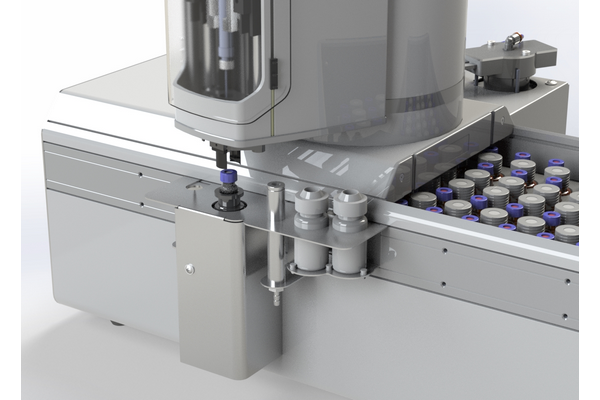
Analytical chromatography has specific requirements when it comes to liquid handling. While in Life Science, handling aqueous samples with standard air displacement pipettes is generally straightforward, in Analytical Chromatography (GC, GC-MS, LC, LC-MS), the rules change entirely. When working with volatile organic solvents such as acetonitrile, methanol, or hexane, the traditional air cushion technology used in air displacement pipettes faces physical limitations that can compromise data quality.
This is where choosing the right liquid handling technology becomes essential for achieving reliable, accurate, and reproducible analytical results.
THE HIDDEN PITFALLS OF AIR DISPLACEMENT
Standard air-cushion pipetting introduces critical risks in chromatographic workflows:
THE SMART SOLUTION: POSITIVE DISPLACEMENT
Analytical precision requires replacing the compressible air cushion with a direct mechanical piston. This approach solves critical analytical challenges through three core advantages:
Furthermore, by removing air-cushion dependence, positive displacement delivers key operational benefits:
THE TAKEAWAY
Protect your analytical data by eliminating air-cushion variability. Upgrading to positive displacement technology ensures total volume confidence, cleaner spectra, and reproducible results across all sample matrices.
→ Request the White Paper
“Why Chromatography Demands Positive Displacement Liquid Handling” to learn more.
Latest News
- The right Liquid Handling technology for Analytical Chromatography
- Stop Over-Automating: Why Partial Automation Wins in Analytical Labs
- Autosampler for PerkinElmer UV-Vis Spectrophotometer
- 2800T for Volatile and Semi-Volatile PFAS Analysis
- OpenLab CDS 3.0 is here: HTA GC Autosamplers are ready from day one!
- New application note: TOGA according to ASTM D3612-C
- New Updates to HTA Autosampler Control by Clarity DataApex
- Autosampler for efficient Battery Recycling analysis
- HTA Autosamplers for Preparative and Semi-Preparative HPLC systems
- How to reduce Power consumption and minimize technical Gas usage