New application note: TOGA according to ASTM D3612-C
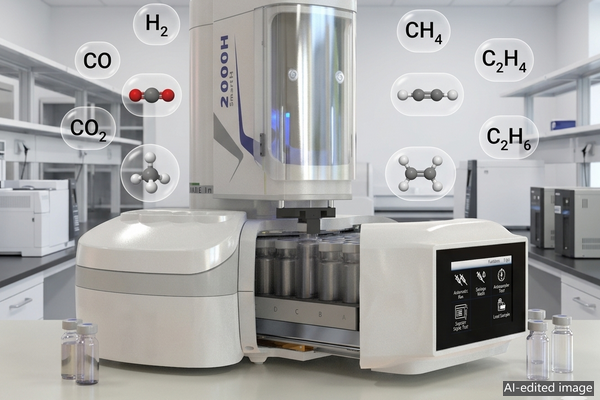
Dissolved Gas Analysis (DGA), also referred to as Transformer Oil Gas Analysis (TOGA), is a key diagnostic technique used to identify developing faults in electrical transformers. When abnormal thermal or electrical stresses occur, the insulating oil and solid insulation materials degrade, generating specific gases that dissolve in the oil. Typical fault gases include hydrogen (H₂), carbon monoxide (CO), carbon dioxide (CO₂), and hydrocarbons such as methane (CH₄), acetylene (C₂H₂), ethylene (C₂H₄), and ethane (C₂H₆). Monitoring and quantifying these gases allows early detection of potential failures, supporting effective preventive maintenance strategies.
ASTM D3612 is the reference standard for dissolved gas analysis in transformer oil, describing three procedures (A, B, and C) for extraction and measurement of these fault gases, with Method C based on headspace gas chromatography.
In this context, HTA 2000H series autosamplers, have been shown to fully comply with ASTM D3612C requirements - when coupled with a properly configured GC - enabling accurate identification and quantification of fault gases, even at very low concentrations (in the ppm range).
Latest News
- The right Liquid Handling technology for Analytical Chromatography
- Stop Over-Automating: Why Partial Automation Wins in Analytical Labs
- Autosampler for PerkinElmer UV-Vis Spectrophotometer
- 2800T for Volatile and Semi-Volatile PFAS Analysis
- OpenLab CDS 3.0 is here: HTA GC Autosamplers are ready from day one!
- New application note: TOGA according to ASTM D3612-C
- New Updates to HTA Autosampler Control by Clarity DataApex
- Autosampler for efficient Battery Recycling analysis
- HTA Autosamplers for Preparative and Semi-Preparative HPLC systems
- How to reduce Power consumption and minimize technical Gas usage