HT1000I autosampler for efficient Battery Recycling analysis
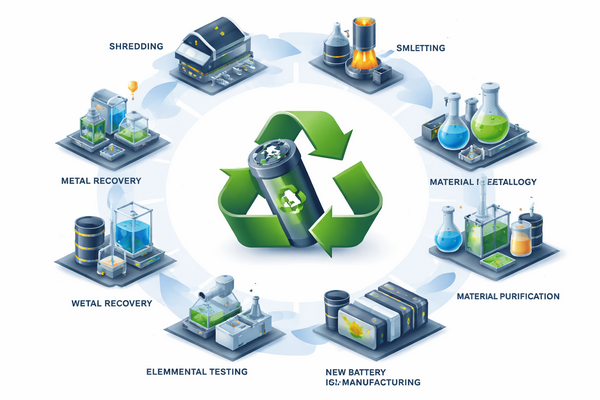
The sustainable management of lithium-ion batteries is essential for environmental protection, waste reduction, and economic sustainability. Recycling these batteries is also critical to fulfilling the environmental promises of electric mobility. As electric vehicles become more widespread, the potential for harmful metals or chemical compounds from spent batteries to enter the environment increases.
Even as a battery’s performance declines over time, the valuable materials inside—such as lithium, nickel, and cobalt—remain present and can be recovered and reused in a continuous recycling cycle. With the rapid growth of the lithium-ion battery sector, a larger share of raw materials is expected to come from recycled sources rather than traditional mining.
Accurate testing is crucial in battery recycling and closely follows the same procedures used in battery manufacturing. This includes: material identification, impurity analysis, verification that recovered components meet quality standards.
The preferred techniques for determining the elemental content and purity of recycled battery materials —including Co, Al, Cu, Li, P, Si, Mg, Na, S, and others—are ICP-OES and ICP-MS. The ICP analysis provide precise quantification and ensure materials are suitable for reuse.
Regardless of the brand of ICP-OES or ICP-MS system used for elemental analysis, HTA HT1000I series autosamplers can be effectively employed to automate sample transfer to any ICP-OES or ICP-MS instrument. Automation with the HT1000I/ HT1200I models minimizes errors, speeds up testing, and allows high-throughput analysis of recycled battery materials without sacrificing accuracy.
Latest News
- HT1000I autosampler for efficient Battery Recycling analysis
- HTA Autosamplers for Preparative and Semi-Preparative HPLC systems
- How to reduce Power consumption and minimize technical Gas usage
- HOW TO VIDEO: Repackage HTA Autosampler
- LEANPREP BOARD: Ready to embrace lean in your lab?
- HTA is thrilled to unveil HTA Monitor 2.0!
- HTA Introduces the Happiness Score
- HS and SPME autosamplers with vial cooling for food and biological samples
- AI-powered GC autosamplers: what benefits?
- Keep Your Samples Safe: Discover the New Thermally Conditioned Rack for 3000A